Understanding social media acronyms is crucial for effective communication in today’s digital age. Whether you’re navigating Twitter, Instagram, or Facebook, knowing the shorthand can significantly enhance your online interactions. This guide covers the 130 most important social media acronyms and slang you should know, ensuring you’re always in the loop and can converse like a pro.
Imagine you’re scrolling through your feed, and you come across terms like “BRB,” “DM,” or “ICYMI.” Knowing what these mean can help you respond promptly and appropriately, boosting your social media presence. From “LOL” (Laugh Out Loud) to “TL;DR” (Too Long; Didn’t Read), these terms are the building blocks of modern online communication.
Ready to dive in? Let’s explore these essential terms and transform your social media game!
Introduction to Social Media Acronyms
Understanding social media acronyms is crucial for anyone navigating the digital landscape. These acronyms, short forms of longer phrases, are widely used in social media terms and digital marketing acronyms to facilitate quicker and more efficient communication.
The importance of grasping these terms cannot be overstated. Imagine scrolling through your favorite platform and encountering abbreviations like “ROI” or “CTR.” Without knowing that ROI stands for Return on Investment and CTR for Click-Through Rate, you’d miss out on significant insights and conversations. Mastering these acronyms can transform your social media experience, making it more engaging and informative.
Acronyms do more than save time—they also serve as a common language that connects users across the globe. When you understand and use acronyms like “FOMO” (Fear of Missing Out) or “ICYMI” (In Case You Missed It), you streamline communication and make your messages more impactful. This shared language fosters a sense of community and belonging among users.
Examples of Common Social Media Acronyms
- B2B – Business to Business
- B2C – Business to Consumer
- UGC – User-Generated Content
- SEO – Search Engine Optimization
For an in-depth look at how these terms are used, check out this article on social media statistics. Additionally, you can find a comprehensive definition of social media acronyms from a reliable source here.
Network-Specific Acronyms
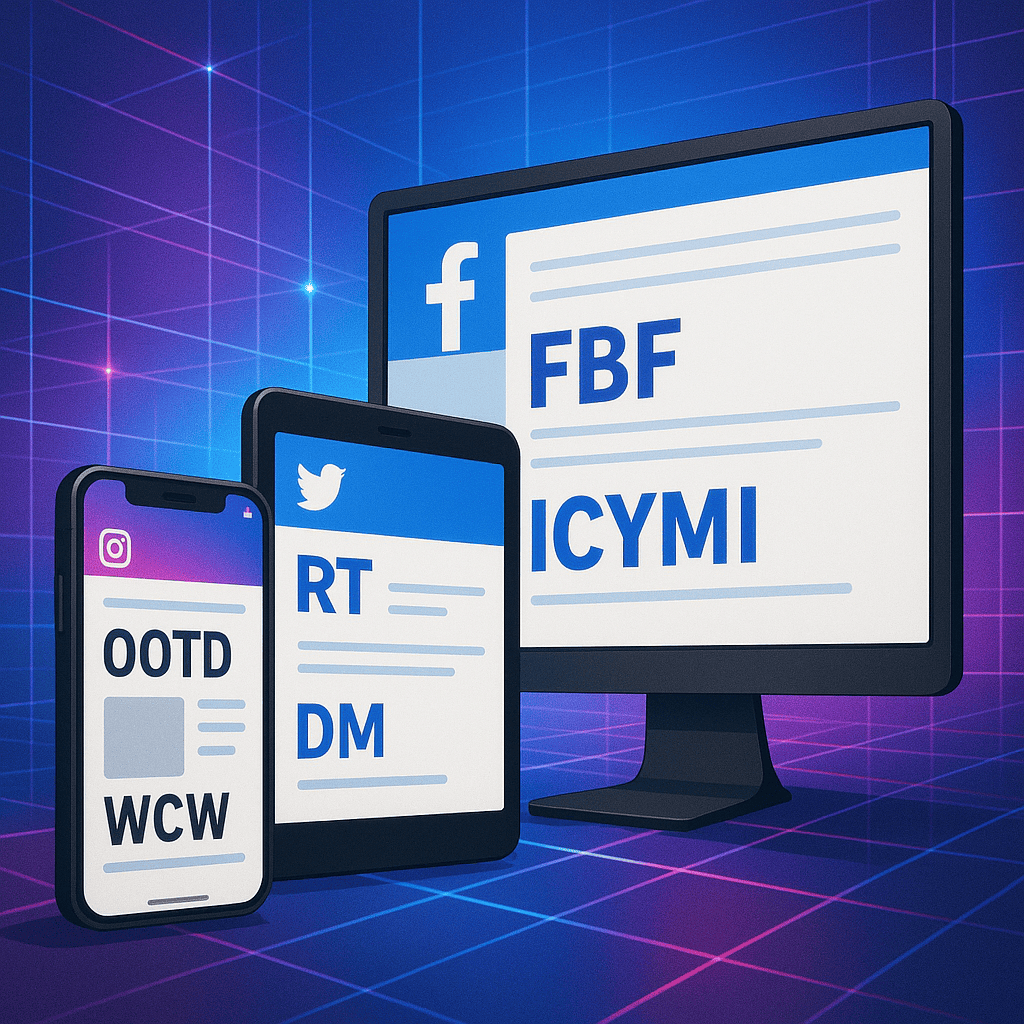
When navigating the vast world of social media, understanding network-specific acronyms is essential. Each platform has its own set of shorthand terms that help users communicate quickly and effectively. Let’s dive into the unique social media acronyms used on Facebook, Twitter, and Instagram, and how they appear in posts.
Acronyms Used on Facebook
Facebook is a platform where people share status updates, photos, and videos. Common acronyms you might encounter include:
- ICYMI – In Case You Missed It
- FOMO – Fear Of Missing Out
- BRB – Be Right Back
- FBF – Flashback Friday
For example, you might see a post like: “BRB, grabbing a coffee! #FOMO on the new cafe in town. ICYMI, check out my last post! #FBF to better days.”
Acronyms Used on Twitter
Twitter, known for its 280-character limit, makes acronyms indispensable. Here are some you’ll frequently see:
- RT – Retweet
- DM – Direct Message
- TBT – Throwback Thursday
- OOTD – Outfit Of The Day
An example tweet might look like: “RT if you love weekends! DM me your plans. #OOTD from last TBT was lit.”
Acronyms Used on Instagram
Instagram, a visually-driven platform, also has its own set of acronyms:
- IG – Instagram
- OOTD – Outfit Of The Day
- WCW – Woman Crush Wednesday
- F4F – Follow for Follow
You might come across a caption like: “Loving today’s OOTD! #WCW goes to all the strong women out there. #F4F anyone? #IGlife”
Understanding these network-specific acronyms will significantly enhance your social media experience. Each platform has its nuances, making it important to tailor your communication accordingly.
For further reading on social media platform usage, you can check out this detailed article.
Business-Related Acronyms
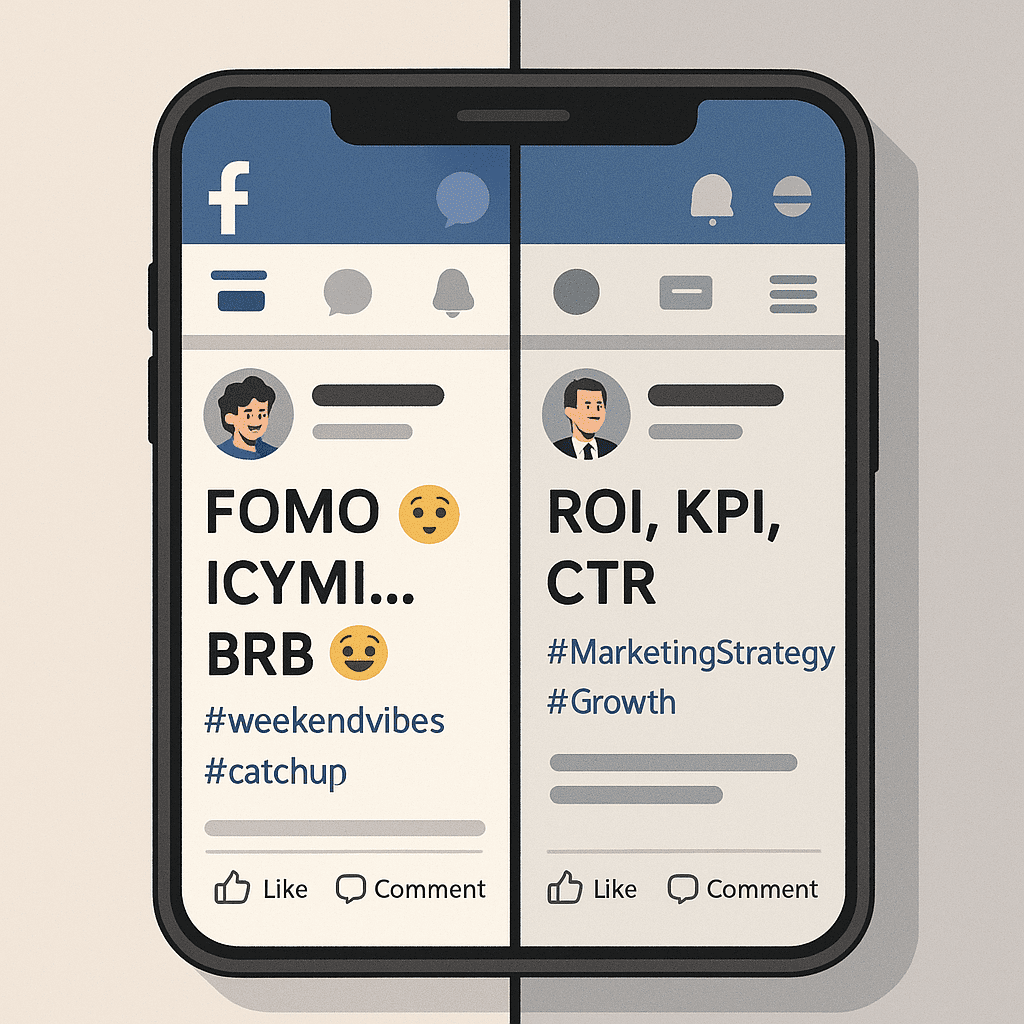
When diving into the world of social media marketing, you’ll quickly encounter a plethora of business-related acronyms that can seem overwhelming at first. Let’s break down some of the most crucial ones you’ll need to know.
- ROI (Return on Investment)
- ROI is a key metric that measures the profitability of your marketing efforts. Essentially, it tells you whether the money you spent on a campaign has generated profits. For instance, if you spent $100 on an ad and made $200 in sales, your ROI would be 100%.
- KPI (Key Performance Indicator)
- KPIs are metrics used to evaluate the success of an organization or of a particular activity. In social media marketing, KPIs might include engagement rates, follower growth, or click-through rates (CTR).
- CTR (Click-Through Rate)
- CTR measures how often people click on a link, ad, or post compared to how many times it was displayed. It’s crucial for understanding the effectiveness of your digital marketing efforts.
These acronyms are not just jargon; they are essential for planning, executing, and measuring the success of your campaigns. For example, a post on Twitter announcing a new product launch might emphasize the ROI of the product, highlight the KPI targets met by the campaign, or showcase a high CTR from the ad.
Staying updated with the latest social media marketing terms is vital. Recently, new acronyms have emerged, such as:
- ROAS (Return on Ad Spend)
- This is similar to ROI but focuses specifically on the revenue generated from advertising.
- CR (Conversion Rate)
- CR measures the percentage of users who take a desired action, such as making a purchase or signing up for a newsletter.
Understanding these digital marketing acronyms helps you communicate more effectively with your team and clients, ensuring everyone is on the same page when discussing marketing strategies and outcomes.
“The best marketers are always learning and adapting to new trends.”
For more on monetizing social media, check out our detailed guide on monetizing social media.
Popular Social Media Acronyms and Slang
If you’ve ever felt lost in the sea of social media slang, don’t worry—you’re not alone. From acronyms to quirky phrases, social media language evolves at lightning speed. Here’s a comprehensive list of 130 acronyms and slang terms, their meanings, and how to use them. This guide will help you navigate the social media world like a pro.
| Acronym/Slang | Meaning | Example |
|---|---|---|
| LOL | Laugh Out Loud | “That meme was hilarious, LOL!” |
| BRB | Be Right Back | “Hold on, BRB, need to grab my charger.” |
| TBT | Throwback Thursday | “#TBT to last summer’s road trip!” |
| FTW | For The Win | “Pizza for dinner, FTW!” |
| SMH | Shaking My Head | “Can’t believe that happened, SMH.” |
“Understanding social media slang can make your online interactions smoother and more enjoyable.”
For a deeper dive into social media trends, check out our detailed analysis of social media trends in India by 2025.
Contextual Usage of Acronyms
Understanding how to use social media acronyms effectively can significantly boost your social media engagement. But how do you ensure you’re using them correctly?
Let’s explore some examples of posts using acronyms. Imagine you’re sharing a motivational quote on Instagram. You might end the post with a hashtag like #TBT (Throwback Thursday) or #TGIF (Thank God It’s Friday) to tap into popular trends. On a platform like Twitter, where brevity is key, acronyms like ICYMI (In Case You Missed It) can help you quickly convey important updates.
“Using acronyms effectively can make your content more relatable and easier to digest.” – Social Media Expert
Best Practices for Acronym Usage
- Know your audience: Ensure your followers understand the acronyms you use. If they’re not familiar with FOMO (Fear Of Missing Out) or YOLO (You Only Live Once), it might confuse them rather than engage them.
- Use sparingly: Overloading your social media posts with acronyms can make them difficult to read. Balance is key.
- Stay relevant: Use acronyms that make sense in the context of your message. For instance, #OOTD (Outfit Of The Day) fits well in fashion-related content but might seem out of place in a tech update.
Common Mistakes to Avoid
- Overuse: Bombarding your audience with acronyms can alienate those who aren’t familiar with them.
- Misinterpretation: Acronyms can have different meanings on different platforms. Ensure you’re aware of the platform-specific context.
- Ignoring clarity: Always prioritize clear communication. If an acronym doesn’t add value, skip it.
Effective usage of acronyms can vary across platforms. On LinkedIn, for instance, professional acronyms like B2B (Business to Business) or SEO (Search Engine Optimization) are more appropriate, while platforms like TikTok might favor more casual, trend-driven acronyms like #SMH (Shaking My Head).
Latest Trends in Social Media Language
The latest social media trends are constantly evolving, and staying updated on the newest acronyms and slang terms can feel like learning a new language. Let’s dive into some of the most recent trends in social media communication and how you can keep up with the ever-changing lingo.
New Acronyms and Slang Terms
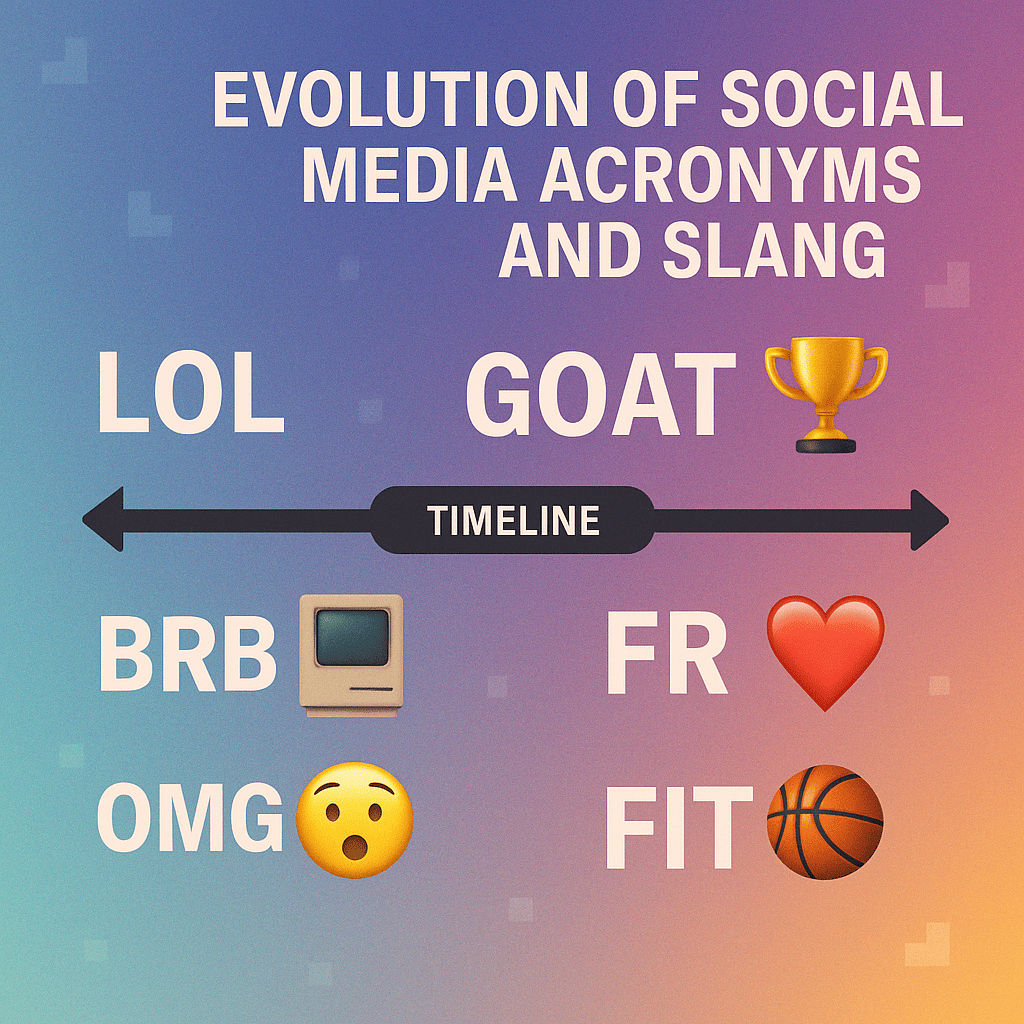
Every day, new acronyms and slang terms emerge across social platforms. Terms like “FOMO” (Fear of Missing Out) and “YOLO” (You Only Live Once) have been around for a while, but newer entries like “GOAT” (Greatest Of All Time) and “FIT” (Outfit) are gaining traction. Recently, acronyms such as “FR” (For Real) and “ICYMI” (In Case You Missed It) have become popular among users.
- FOMO
- Fear of Missing Out
- YOLO
- You Only Live Once
- GOAT
- Greatest Of All Time
- FIT
- Outfit
- FR
- For Real
- ICYMI
- In Case You Missed It
Trends in Social Media Communication
With the rise of short-form video content and ephemeral messaging, the way we communicate on social media has shifted. Platforms like TikTok and Instagram Stories emphasize brevity and visual engagement, leading to the creation of unique expressions and shorthand that fit the format.
“The dynamic nature of social media means that language trends are in a state of constant flux.”
How to Stay Updated with New Terms
Keeping up with new social media slang can be challenging, but there are several strategies you can use. Follow influencers and content creators who are at the forefront of these trends, join online communities, and subscribe to newsletters that focus on social media insights. Additionally, regularly checking platforms like Urban Dictionary can help you decode unfamiliar terms.
Stay ahead of the curve by exploring our latest social media trends and insights.
Frequently Asked Questions about Social Media Acronyms
What does DM stand for?
DM stands for Direct Message. It’s a feature used on social media platforms like Twitter and Instagram to send private messages to other users. This allows for more personal and confidential conversations compared to public posts.
How can I use social media acronyms in my posts?
Using social media acronyms can save both space and time, making your messages more concise and snappy. However, it’s crucial to ensure your audience understands these acronyms. For instance, while many people know that “DM” stands for “Direct Message,” some acronyms might not be as familiar. You wouldn’t want your message to get lost in translation!
Additionally, be cautious about overusing acronyms in professional contexts. While they can make communication quicker, too many can come across as unprofessional or confusing. Balance is key to maintaining clarity and professionalism in your posts.
What are some common business-related acronyms used on social media?
In the world of social media, acronyms like ROI (Return on Investment), KPI (Key Performance Indicator), and CTR (Click-Through Rate) are frequently used. These terms are essential for measuring and discussing business performance on various social platforms.
Conclusion
Understanding social media acronyms is essential for effective communication in today’s digital world. Throughout this guide, we’ve covered 130 Most Important Social Media Acronyms and Slang You Should Know, ensuring you are well-equipped to navigate and engage effectively across various platforms.
By integrating these terms into your social media interactions, you can enhance your presence and stay relatable to your audience. Remember, staying updated and adaptable in the ever-evolving landscape of social media can truly set you apart. Keep learning, keep engaging, and watch your social media influence grow!
Leave a Reply