Social Media Statistics Shaping United Kingdom’s Digital Landscape in 2025
Social media statistics are crucial for understanding the digital landscape of the United Kingdom in 2025. With the evolution of technology, the way people interact on social media platforms is continuously changing. Let’s delve into an overview of social media usage, key platforms, and the impact of AI and personalization on user engagement.
In 2025, the UK’s social media usage is expected to reach unprecedented levels. Platforms like Facebook, Instagram, and TikTok will likely dominate, each catering to distinct demographics. Facebook is projected to maintain its stronghold among older users, while Instagram and TikTok will continue to be popular among younger audiences.
Artificial Intelligence (AI) and personalization are revolutionizing social media. AI-driven algorithms tailor content to individual preferences, enhancing user experience and engagement. By understanding user behavior, platforms can deliver more relevant content, thereby increasing interaction and satisfaction. This shift not only benefits users but also offers businesses new opportunities for targeted advertising and customer engagement.
Overview of Social Media Usage in the UK
In 2025, the landscape of social media usage in the UK is witnessing significant changes. The total number of social media users has surged, reflecting the growing digital engagement among the population. As compared to previous years, the growth rate is noteworthy, highlighting the evolving dynamics of online interactions.
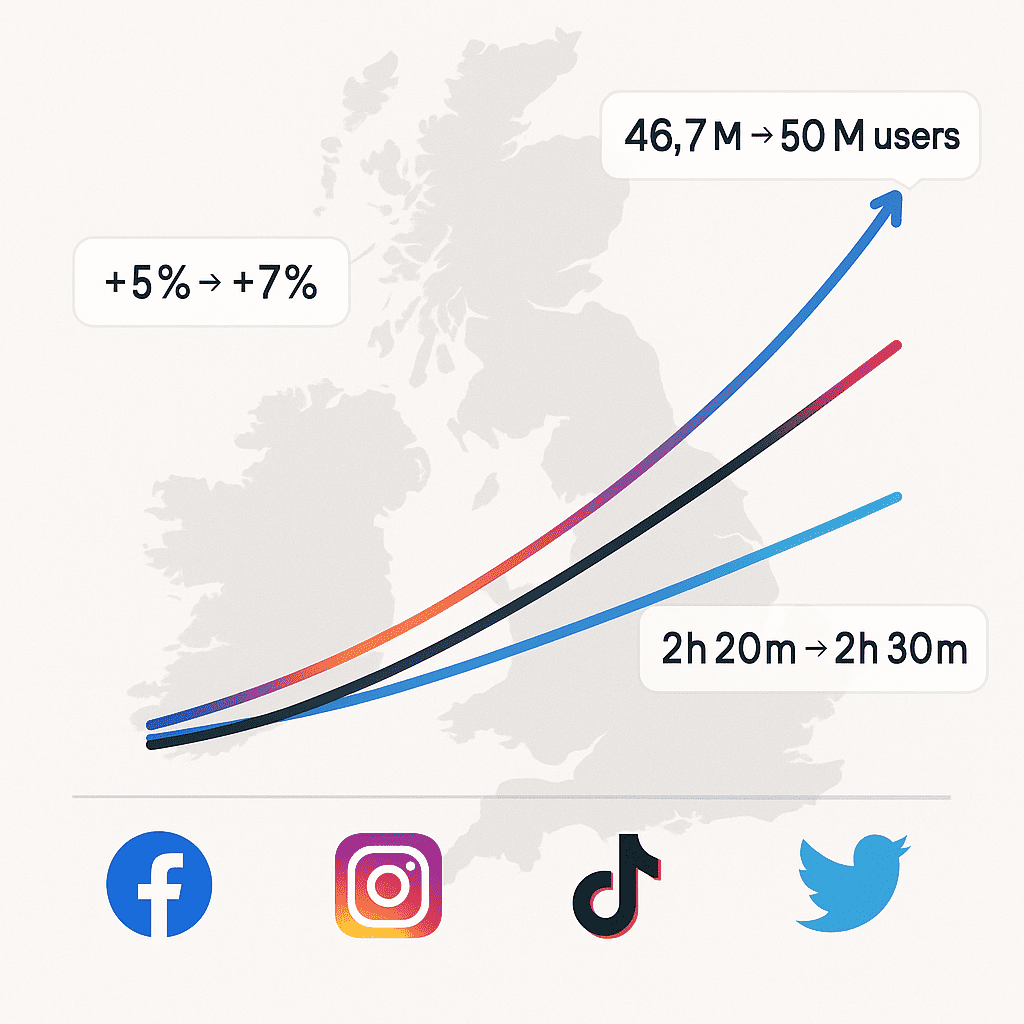
To delve into the specifics, the UK is home to approximately 50 million active social media users in 2025. This remarkable figure underscores the widespread adoption of social platforms across various demographics. Compared to 2024, there has been an impressive growth rate of 7%, driven by increased accessibility to digital devices and internet services.
Moreover, the average time spent on social media by users has seen a steady rise. In 2025, individuals in the UK spend nearly 2 hours and 30 minutes daily on platforms such as Facebook, Instagram, TikTok, and Twitter. This reflects a deeper engagement and dependency on social media for communication, entertainment, and information.
| Year | Total Users (in millions) | Growth Rate | Average Time Spent (daily) |
|---|---|---|---|
| 2024 | 46.7 | 5% | 2 hours 20 minutes |
| 2025 | 50.0 | 7% | 2 hours 30 minutes |
For further insight into social media usage trends in other regions, you can explore social media usage trends in America.
Top Social Media Platforms and User Demographics
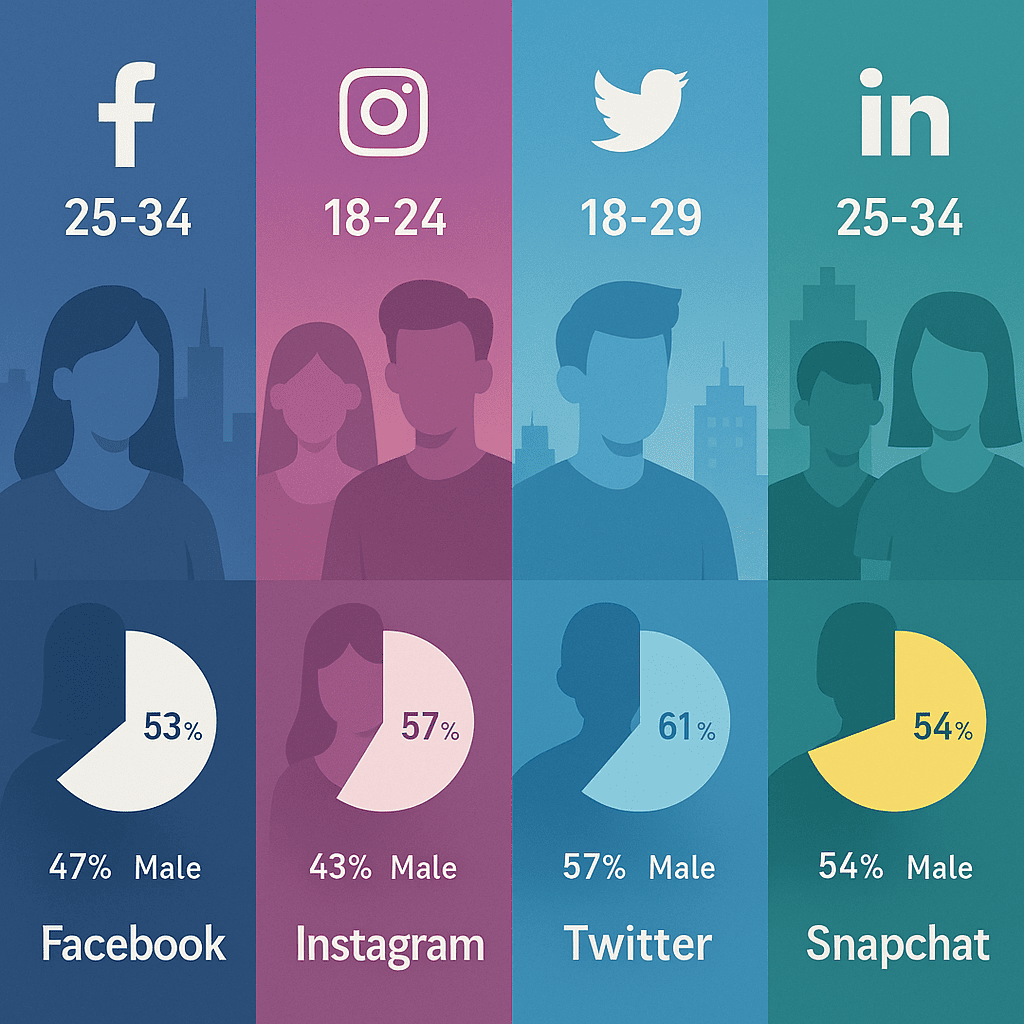
When discussing the top social media platforms UK 2025, it’s essential to understand the user demographics across these platforms. Knowing who uses these platforms can help tailor marketing strategies and content creation to better reach the target audience.
Understanding social media demographics ensures that your content connects with the right audience at the right time.
Let’s dive into the major players in the UK social media landscape:
| Platform | User Demographics (Age) | User Demographics (Gender) | User Demographics (Location) |
|---|---|---|---|
| 25-34 years (largest group) | 53% female, 47% male | Urban areas predominant | |
| 18-24 years (largest group) | 51% female, 49% male | Widespread usage, urban and suburban | |
| 30-49 years (largest group) | 56% male, 44% female | Urban and suburban areas | |
| 30-49 years (largest group) | 57% male, 43% female | Primarily metropolitan areas | |
| Snapchat | 13-24 years (largest group) | 61% female, 39% male | Urban areas predominant |
Comparing social media demographics across these platforms reveals interesting trends. For example, Facebook continues to attract a slightly older demographic compared to Instagram and Snapchat, which are favored by younger users. Gender distribution varies, with platforms like Twitter and LinkedIn having more male users, while Instagram and Snapchat lean towards female users.
Geographically, urban areas dominate social media usage, although suburban and rural areas are increasingly active. Understanding these nuances can significantly impact how campaigns are designed and executed. For more insights on social media platforms in Australia, check out our detailed analysis.
Impact of AI and Personalization in Social Media
The impact of AI on social media marketing is undeniable, especially as we look toward AI in social media in the UK by 2025. AI’s role in content personalization is revolutionizing how brands connect with their audience. Imagine scrolling through your favorite social media platform and seeing content that feels tailor-made for you – that’s the magic of AI at work.
AI algorithms analyze user behavior, preferences, and interaction patterns to deliver personalized content. For example, Netflix’s recommendation engine, which suggests shows based on your viewing history, is a classic example of AI-driven personalization. Similarly, social media platforms like Facebook and Instagram use AI to curate content that aligns with your interests, making your experience more engaging.
AI-driven social media campaigns are already making waves. Take Coca-Cola’s “Share a Coke” campaign, where AI was used to analyze social media trends and create personalized ads. The campaign saw a significant boost in engagement and sales. Another example is Spotify’s “Wrapped” campaign, which uses AI to generate personalized year-end summaries for its users, creating shareable content that goes viral each year.
Looking ahead, the future trends in AI and social media are both exciting and promising. We can expect more sophisticated AI tools that offer even deeper personalization. Predictive analytics will become more prevalent, allowing brands to anticipate user needs and deliver content proactively. Moreover, AI-driven chatbots and virtual assistants will enhance customer interactions, providing instant and personalized responses.
For businesses and marketers, understanding and leveraging these AI advancements is crucial. By embracing AI tools for Instagram analytics, for instance, brands can gain valuable insights and optimize their strategies for better engagement and ROI. Read more about AI tools for Instagram analytics to stay ahead in this evolving landscape.
Social Media Trends Influencing Business Strategies

As we move toward 2025, understanding social media trends in the UK is becoming crucial for businesses aiming to stay ahead. These trends are not just shaping the digital landscape; they’re fundamentally altering consumer behavior and how companies position themselves in the market.
One of the most significant emerging trends is the rise of ephemeral content—short-lived posts that disappear after a set period. Platforms like Instagram and Snapchat have perfected this with their Stories feature. This trend leverages FOMO (fear of missing out), prompting users to engage promptly and frequently. As a result, businesses are crafting more time-sensitive promotions and behind-the-scenes glimpses to capture attention.
Another trend shaping the landscape is the growing popularity of social commerce. Platforms like Facebook and Instagram are integrating shopping features directly into their apps, transforming them into virtual marketplaces. This seamless shopping experience is influencing consumer behavior by reducing the steps between discovery and purchase. Brands like Gymshark are excelling in this area, utilizing Instagram Shops to offer a fluid purchasing journey, thereby boosting sales.
Moreover, the emphasis on authentic, user-generated content (UGC) continues to grow. Consumers trust real experiences shared by fellow users more than polished advertisements. Companies are encouraging their customers to share reviews and experiences online, which not only builds trust but also enhances engagement. Take Glossier, for example; they have mastered the art of leveraging UGC to build a community and drive brand loyalty.
Additionally, as discussed in our previous section on AI, personalization in social media is paramount. AI-driven tools are enabling hyper-targeted advertising and personalized content, making interactions more relevant and engaging. For instance, Spotify’s personalized playlists are a testament to how tailored experiences can keep users hooked.
In summary, these social media trends are reshaping not only how consumers interact with content but also how businesses strategize their marketing efforts. Staying updated with these trends is essential for any company looking to thrive in the digital age. For more on effective strategies, check out our guide on strategies for Instagram growth.
Projected Growth and Changes in Social Media Engagement

As we look towards the future, the projected social media growth UK 2025 is set to be remarkable. Analysts predict a significant increase in user numbers across various platforms, driven by advancements in technology and changing user preferences. This anticipated growth will undoubtedly shape the way businesses approach their marketing strategies.
With the rise in user numbers, we can expect notable changes in social media engagement patterns. Users are likely to spend more time on platforms, interacting with content in diverse ways. For instance, video content is gaining traction, and live streaming is becoming increasingly popular. This shift means marketers need to adapt by creating dynamic content that resonates with their audience.
Long-term projections indicate that these changes will have profound implications for marketers. Businesses must stay ahead of trends to maintain competitive advantage. Utilizing features like Instagram collaboration posts can enhance engagement and expand reach. Additionally, understanding these emerging trends allows marketers to craft strategies that are both innovative and effective.
| Year | User Growth (%) | Engagement Trends |
|---|---|---|
| 2023 | 15% | Increased video content consumption |
| 2024 | 18% | Rise in live streaming popularity |
| 2025 | 20% | Greater use of interactive content |
In summary, the projected growth and changes in social media engagement offer exciting opportunities for businesses. By understanding these trends and adapting strategies accordingly, marketers can effectively reach and engage their target audiences.
Frequently Asked Questions about Social Media Statistics Shaping United Kingdom’s Digital Landscape in 2025
What are the current social media usage statistics in the UK?
As of 2023, the total number of social media users in the UK has reached a staggering 53 million, representing approximately 77% of the population. This number reflects a steady growth rate of about 2.5% annually, highlighting the increasing integration of social platforms into daily life.
On average, individuals in the UK spend around 1 hour and 50 minutes per day on social media. This figure underlines the significant role these platforms play in both personal and professional spheres, from staying connected with friends and family to engaging with brands and consuming news.
Which social media platforms are most popular in the UK?
When it comes to social media in the UK, several platforms dominate the landscape. Facebook remains a staple, with a broad user base spanning various age groups. Instagram and Snapchat are particularly popular among younger demographics, especially teens and young adults. Meanwhile, LinkedIn is indispensable for professionals seeking networking opportunities.
In terms of usage, Instagram has seen a significant rise, with users engaging more frequently with visual content. On the other hand, Twitter continues to be a key platform for real-time updates and discussions, especially among news enthusiasts and public figures.
Comparatively, TikTok has emerged as a major player, capturing the attention of Gen Z with its short-form video content. Each platform offers unique features that attract distinct user groups, shaping the social media ecosystem in the UK.
How is AI influencing social media strategies?
The role of AI in shaping social media strategies is increasingly significant, driving efficiency and personalization. AI helps with analyzing vast amounts of data for insights, automating content creation, and even managing customer interactions through chatbots. For instance, AI-driven campaigns by brands like Nike and Starbucks have utilized personalized ads and real-time customer engagement to boost their reach and effectiveness.
Looking ahead, AI is set to further revolutionize social media with trends such as deeper personalization, predictive analytics, and augmented reality experiences. As AI continues to evolve, businesses can leverage these advancements to create more dynamic and engaging social media strategies.
What are the key trends in social media for businesses in 2025?
As we look toward 2025, several key trends are poised to reshape how businesses engage on social media. First, immersive technologies like augmented reality (AR) and virtual reality (VR) are becoming mainstream, offering new ways for brands to create engaging and interactive experiences. Imagine trying on clothes virtually before purchasing or attending a virtual concert from your living room.
Additionally, social commerce continues to rise, with platforms integrating shopping features directly into their interfaces. This trend significantly impacts consumer behavior, making purchasing decisions quicker and more seamless. Think of Instagram’s shoppable posts or Pinterest’s buyable pins as prime examples.
Another trend is the growing importance of personalized content. Businesses are leveraging data analytics to tailor their messages to individual preferences, enhancing user experience and fostering brand loyalty.
These trends highlight the evolving landscape of social media, urging businesses to innovate continually and adapt to stay relevant in the digital age.
Conclusion
In summary, understanding the Social Media Statistics Shaping United Kingdom’s Digital Landscape in 2025 is crucial for anyone looking to leverage these platforms effectively. The data highlights significant growth in social media usage, with platforms like Instagram and TikTok dominating among younger demographics, while Facebook continues to be popular among older users.
Moreover, AI’s influence on social media strategies cannot be overstated. From personalized content recommendations to advanced analytics, AI is transforming how businesses interact with their audience.
As we move forward, staying informed about these trends and statistics will empower businesses to create more targeted and effective social media strategies, ultimately leading to better engagement and success in the digital arena.
Leave a Reply