
Social Media Statistics Shaping Canada’s Digital Landscape in 2025
In 2025, social media usage in Canada is set to hit unprecedented heights, driven by technological advancements and shifting user behaviors. The landscape is characterized by the integration of artificial intelligence (AI), which is fundamentally transforming how Canadians interact on these platforms.
AI’s impact on social media trends is particularly significant. From personalized content recommendations to sophisticated chatbots enhancing customer service, AI is ensuring that users receive a tailored experience. It’s not just about convenience; it’s about creating a seamless, engaging environment that anticipates and meets user needs.
Looking forward, future projections indicate a surge in the popularity of emerging platforms. Platforms like “TrendSphere” and “ConnectFlare” are gaining traction, promising innovative features that cater to niche interests and communities. As these platforms evolve, they are expected to redefine the digital interaction landscape in Canada.
Overall, the social media statistics shaping Canada’s digital landscape in 2025 reveal a dynamic, AI-driven environment that is constantly evolving to meet the demands of its users.
Overview of Social Media Usage in Canada 2025
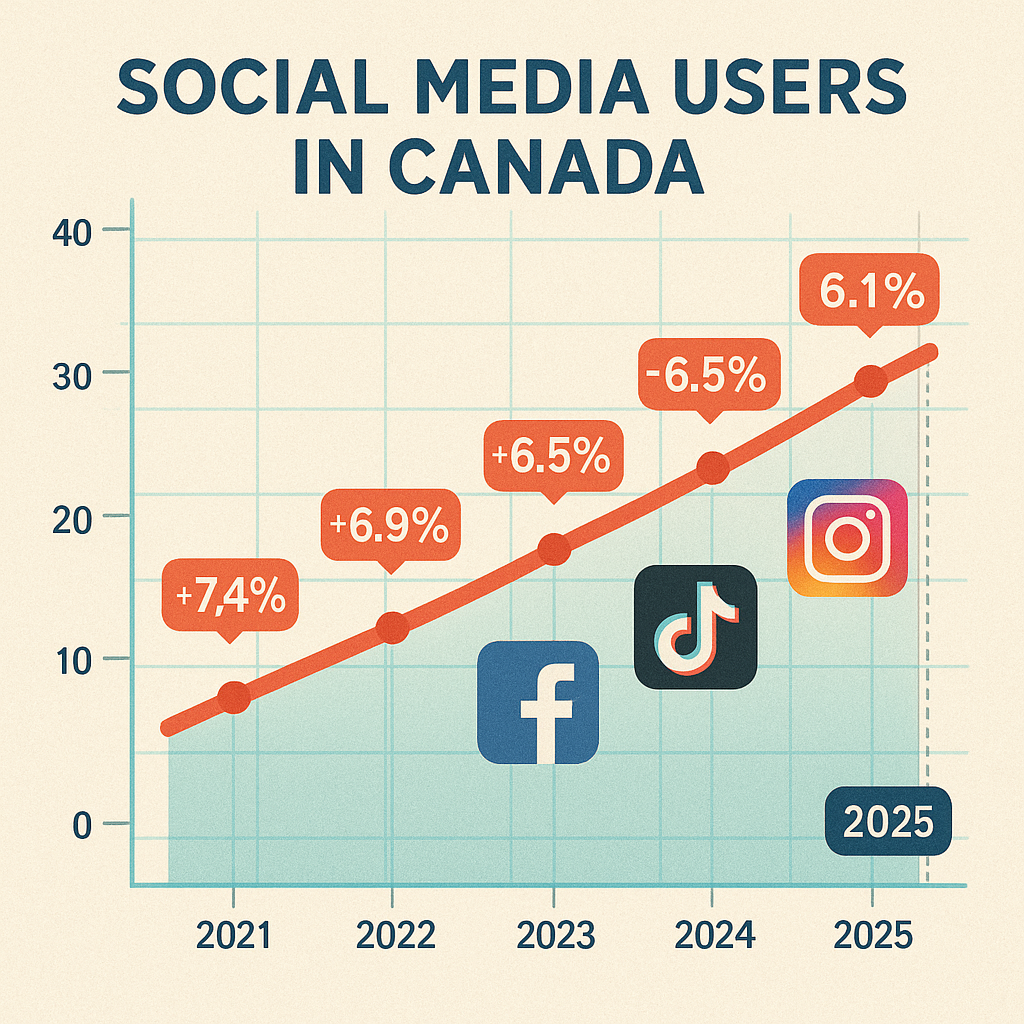
As we delve into the Social Media Statistics Shaping Canada’s Digital Landscape in 2025, it’s essential to understand the current state and the evolution of social media usage in Canada. This comprehensive overview highlights the total number of users, their percentage of the population, and the growth trends over the past few years.
In 2025, the total number of social media users in Canada is projected to reach 39 million, representing a substantial portion of the country’s population. This figure translates to approximately 95% of Canadians actively engaging with social media platforms. This widespread adoption underscores the integral role social media plays in Canadians’ daily lives, from personal connections to professional networking and entertainment.
When looking at the growth trends, the increase in social media usage has been steadily climbing. Compared to previous years, there has been a notable rise. For instance, back in 2021, the number of users was around 33 million, accounting for about 87% of the population. This steady growth showcases how digital marketing in Canada is increasingly leveraging social media platforms to reach broader audiences.
Moreover, the upward trajectory is expected to continue, driven by advancements in technology, increased internet accessibility, and the growing popularity of new and existing social media platforms. The comparison with UK social media statistics also reveals interesting parallels and divergences in user behavior and platform preferences.
For a deeper dive into these trends, you might want to explore the latest social media usage report, which offers a detailed analysis of the factors influencing these changes and predicts future patterns.
Demographic Breakdown of Social Media Users
Understanding the social media user demographics in Canada is crucial for anyone looking to tailor their content or marketing strategies effectively. Let’s delve into the specifics of age groups, gender distribution, and regional differences that paint a comprehensive picture of online behavior statistics.
Age Groups and Their Social Media Usage
Social media platforms are used by diverse age groups, each with distinct online habits. The younger demographic, particularly those aged 18-24, are the most active, engaging predominantly with platforms like TikTok and Instagram. As we move to the 25-34 age bracket, usage shifts slightly towards Facebook and LinkedIn, highlighting a blend of personal and professional networking. Interestingly, even the 45-54 age group shows significant activity, primarily on Facebook and Pinterest, indicating a broadening user base.
Gender Distribution
When examining user demographics by gender, we observe some intriguing trends. Females tend to dominate platforms like Pinterest and Instagram, where visual content is key, while males show a higher presence on platforms such as Twitter and Reddit, which are often centered around news and discussions. This gender-based preference highlights the importance of content type and platform in reaching your target audience effectively.
Regional Differences
Canada’s vast geography translates into varied social media user demographics across regions. Urban areas like Toronto and Vancouver exhibit higher social media adoption rates, with platforms like Instagram and LinkedIn seeing substantial engagement due to their cosmopolitan audiences. Conversely, rural regions display a stronger Facebook presence, reflecting the platform’s role in connecting communities over long distances. To understand these differences better, you can view a comparison with American social media demographics.
| Region | Top Platforms | Unique Trends |
|---|---|---|
| Urban | Instagram, LinkedIn | High engagement with visual and professional content |
| Rural | Strong community connections |
By recognizing these demographic trends, businesses and content creators can strategically target their efforts, ensuring they reach the right audience with the right message. For more in-depth analysis, refer to this comprehensive demographic study on social media usage.
Platform-Specific Insights and Trends
When examining social media platforms in Canada, it’s essential to understand the unique behaviors and trends associated with each platform. This section delves into the specifics of Facebook, Instagram, Twitter, and emerging platforms like TikTok, providing a comprehensive overview of social media growth trends.
Facebook remains a dominant force in Canada, with a significant portion of the population actively engaging on the platform. The key trend here is the increasing use of Facebook for community building and local business promotion. Users are leveraging groups and pages to foster connections and support local enterprises.
“In Canada, Facebook continues to be a pivotal platform for community engagement and local business promotion, with users actively participating in groups and pages.”
Instagram’s popularity in Canada is driven by its visual-centric approach, appealing particularly to younger demographics. The rise of Instagram Stories and IGTV has reshaped content consumption, emphasizing ephemeral and long-form video content. Brands are increasingly utilizing these features to create more engaging and interactive experiences for their audiences.
Twitter’s role in Canada has evolved from a platform for real-time news to a space for public discourse and advocacy. The platform’s concise format facilitates quick updates and discussions, making it a preferred choice for influencers, journalists, and activists. Monitoring trending hashtags on Twitter provides valuable insights into current public sentiments and emerging issues.
Emerging Platforms like TikTok
Among the emerging social platforms, TikTok stands out with its explosive growth in Canada. Known for its short-form video content, TikTok has captured the attention of younger audiences and is rapidly becoming a mainstream platform. Brands and creators are tapping into TikTok’s algorithm to reach wider audiences through creative and viral content strategies.
| Platform | Main User Demographic | Key Trend |
|---|---|---|
| Adults 25-54 | Community engagement, local business promotion | |
| Teens and young adults | Visual content, Stories, IGTV | |
| Professionals, activists, influencers | Public discourse, trending hashtags | |
| TikTok | Teens and young adults | Short-form video, viral content |
For a comparison with Australian platform trends, refer to this insightful article.
The Role of AI in Shaping Social Media

Artificial intelligence (AI) has become a cornerstone of the modern digital landscape, significantly impacting social media platforms and their usage. From AI-driven content recommendations that keep you scrolling through your feed, to sophisticated chatbots enhancing customer service, AI’s influence is both far-reaching and profound.
One of the most visible applications of AI in social media Canada and globally is through content recommendations. Platforms like Facebook, Instagram, and YouTube utilize AI algorithms to analyze user behavior and preferences, delivering personalized content that keeps users engaged. This method not only enhances the user experience but also increases the time spent on these platforms, driving higher engagement rates. For example, Netflix’s recommendation engine, which is powered by AI, has revolutionized how we consume content by predicting what we might like based on our viewing history.
Another crucial role of AI is in customer service through chatbots. These AI-driven tools are designed to handle a multitude of customer inquiries efficiently and effectively. Whether it’s resolving issues, providing product information, or guiding users through complex processes, chatbots are transforming customer service on social media. They are available 24/7, ensuring that businesses can offer continuous support, thereby improving customer satisfaction and loyalty.
Furthermore, AI is reshaping AI in digital marketing, particularly in social media advertising. AI-driven ad campaigns analyze vast amounts of data to identify target audiences more accurately and create more relevant advertisements. This precision targeting not only maximizes ad spend but also boosts conversion rates. For instance, AI tools can segment audiences based on their behavior, demographics, and interests, ensuring that ads reach the most receptive users. This strategic approach to advertising is a game-changer for marketers looking to optimize their social media strategies.
As these examples illustrate, AI influencing social media trends is undeniable. It’s reshaping how content is delivered, how businesses interact with customers, and how advertisements are targeted. For those looking to delve deeper into how AI tools are enhancing social media analytics, consider exploring our article on AI tools for Instagram analytics.
Future Projections and Emerging Trends
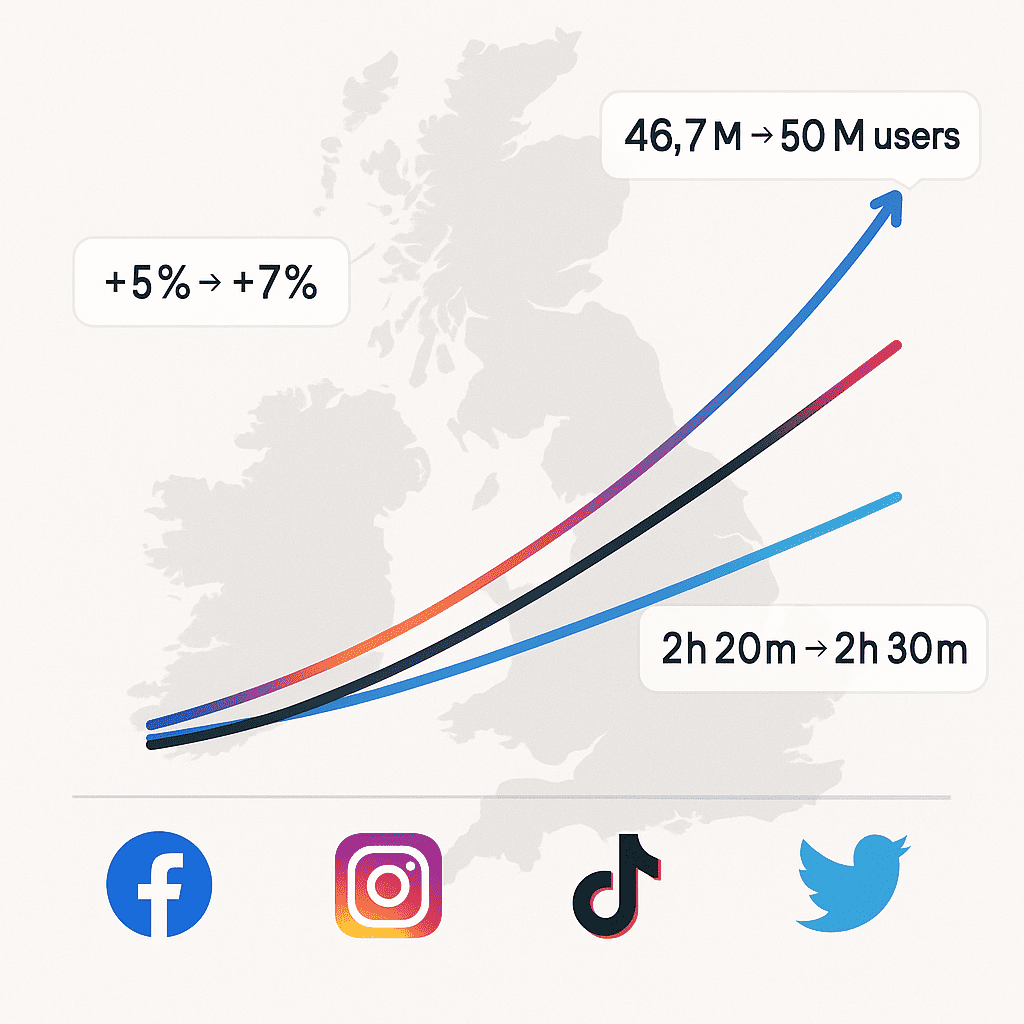
The future of social media marketing in Canada is poised for significant transformations. Analysts predict robust social media growth trends over the next decade, driven by increased internet penetration and mobile usage. According to recent studies, social media ad spending in Canada is expected to grow at an annual rate of 8%, reaching unprecedented heights by 2025.
“By 2025, social media ad spending in Canada will surpass $3 billion, reflecting the platform’s escalating influence on consumer habits and brand strategies.” – Industry Analyst
Moreover, new technologies such as augmented reality (AR) and virtual reality (VR) are set to revolutionize user experiences. Imagine trying on clothes virtually before purchasing or attending a concert from the comfort of your home using VR. These immersive experiences are not just futuristic fantasies but are actively shaping the future of social media marketing in Canada.
In terms of emerging social platforms, several new players are making waves. Platforms like “ChatWave,” which focuses on audio-based interactions, and “VisualNet,” a rising star in visual content sharing, are gaining traction among younger demographics. These platforms offer unique opportunities for businesses to engage with audiences in innovative ways.
For businesses looking to stay ahead, understanding these trends is crucial. Adopting strategies for future social media growth can provide a competitive edge. Additionally, keeping an eye on emerging platforms can help brands harness new marketing avenues.
Stay Ahead of the Curve
Leverage our insights to navigate the evolving landscape of social media marketing. Explore our comprehensive guide on future social media growth strategies.
For more information on future trends in social media, consider exploring authoritative sources such as industry reports and expert blogs.
Frequently Asked Questions about Social Media Statistics Shaping Canada’s Digital Landscape in 2025
What are the most popular social media platforms in Canada?
In Canada, Facebook remains the most popular social media platform, boasting a vast user base that spans across various age groups. Despite the emergence of newer platforms, Facebook’s extensive features and community-centric approach continue to attract a large audience.
Instagram and TikTok are experiencing rapid growth, particularly among younger users. Instagram’s visual-centric model, combined with its integration of Stories and Reels, has solidified its position as a go-to platform for lifestyle and influencer content. TikTok’s explosive rise can be attributed to its short-form video format and highly engaging algorithm, making it a favorite for entertainment and creative expression.
Meanwhile, Twitter usage has stabilized. While it lags behind Facebook, Instagram, and TikTok in terms of user numbers, it still holds a dedicated user base who rely on it for real-time news updates and discussions.
How is AI changing the social media landscape?
Artificial Intelligence (AI) is revolutionizing social media through AI-driven content recommendations, making platforms more personalized and engaging. You might notice that your feeds are increasingly tailored to your interests, thanks to sophisticated algorithms analyzing your interactions.
Moreover, AI is enhancing customer service with chatbots, which offer immediate support and resolve issues efficiently, elevating user satisfaction. This automation allows businesses to handle customer inquiries 24/7, providing a seamless experience.
Lastly, AI improves targeting in social media advertising, enabling marketers to reach specific audiences with greater precision. By analyzing user data, AI helps create more effective and relevant ad campaigns, boosting engagement and conversion rates.
What demographic uses social media the most in Canada?
In Canada, social media is most actively used by young adults aged 18-29. This demographic is highly engaged across various platforms, often leading trends and setting the pace for social media evolution. The 30-49 age group also shows significant usage, leveraging social media for both personal and professional purposes.
Conversely, older demographics tend to use social media less frequently. While there is still notable participation, the engagement levels decrease with age, reflecting a broader trend seen globally. This pattern highlights the importance of targeting content and strategies appropriately across different age groups to maximize reach and impact.
What are the future trends in social media for Canada?
The landscape of social media in Canada is set to evolve dramatically in the coming years. One notable trend is the increased use of AI and automation. From chatbots to personalized content delivery, AI is transforming how users interact with platforms.
We can also expect the growth of emerging platforms like Clubhouse and newer entrants that cater to niche communities. These platforms are attracting more users, especially younger demographics seeking fresh experiences.
Lastly, the continued rise in video content cannot be overstated. With platforms like TikTok and Instagram Reels leading the charge, Canadian social media users are consuming more video content than ever before, a trend likely to persist and grow.

Conclusion
As we have seen, Social Media Statistics Shaping Canada’s Digital Landscape in 2025 reveal a dynamic and evolving online environment. Key statistics highlight a substantial increase in user engagement and platform diversity, reflecting broader digital adoption across the nation.
Artificial Intelligence (AI) is poised to significantly influence social media in Canada by offering personalized experiences and advanced analytics, enhancing user interaction and business strategies alike. The integration of AI will continue to drive innovation, making social platforms smarter and more intuitive.
Looking forward, future projections and emerging trends suggest a continued growth in social media influence, with new technologies and platforms reshaping how Canadians connect and communicate. The landscape will likely see a rise in niche networks and immersive experiences, setting the stage for an even more interconnected digital future.
In sum, staying informed about these trends and leveraging them effectively will be crucial for businesses and individuals aiming to thrive in Canada’s rapidly transforming social media arena.
Leave a Reply